Welcome to Henan Mine Crane Co.,Ltd.
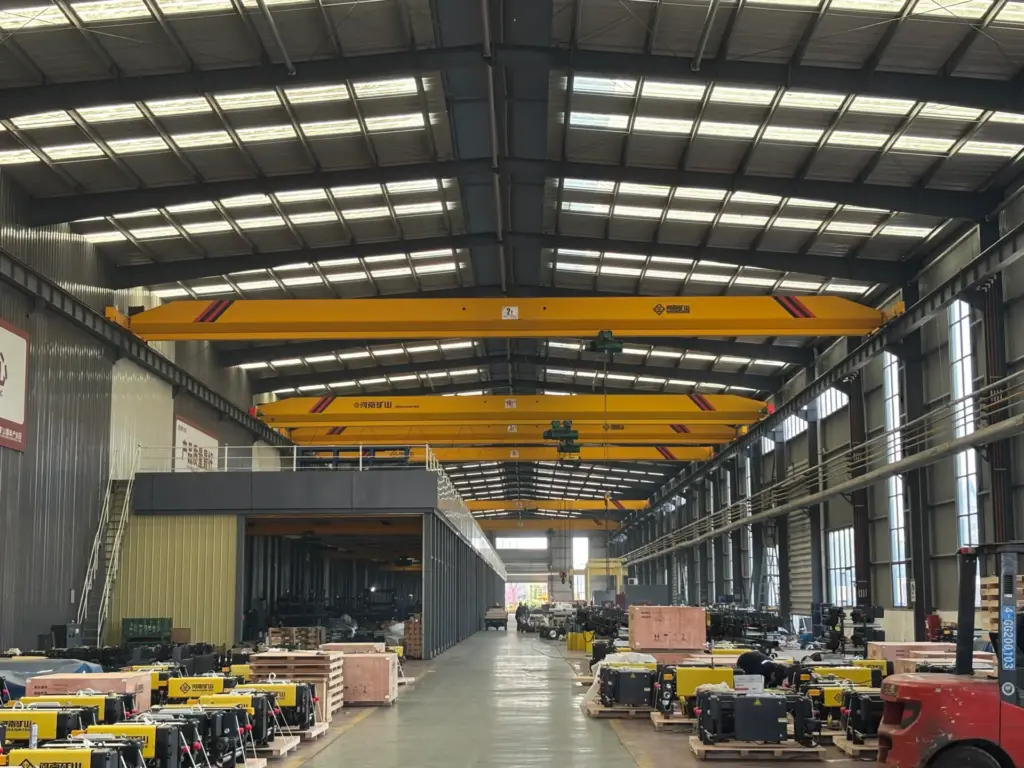
Normal cranes are typically designed for use in clean warehouses, but not all material handling takes place in such environments. A mine, steel bay, paint room, cement plant, chemical store or offshore yard is a very different place. In such locations, there is a real risk that dust will penetrate small spaces. Wet air can also be a problem, causing steel to rust, while heat can attack the brakes and cables of mobile cranes. Furthermore, gas or dust can pose a fire risk in these environments. As a result, the best lifting solution for any site is one that has been tailored to meet its specific needs, rather than simply selecting a crane from a list.
Important decisions regarding high-performance cranes are often taken without any analysis of real working data. The following criteria need to be recorded prior to selection: Safe Working Load, span, lifting height, headroom, duty class, working cycle, power supply, control method and type of load. Though these seem to be straightforward criteria, many crane problems already start here. A 10-ton item lifted twice a day is not the same as 10 tons of material being lifted every few minutes.
Crane solutions for harsh environments go beyond simple lifting. In some environments, the crane itself will also be exposed to corrosion due to presence of sea air or chemicals. Explosion proof cranes are needed for hazardous areas. Furthermore, bulk material plants often have very dusty environments, where dust-proof design of crane components is necessary. In steelwork environments, cranes are also exposed to high temperatures and hence require heat protection.
Low headroom cranes can be ideal for low roof structures. They can provide increased hook height without the need for additional building height. Low headroom cranes can make an ideal lifting solution for items such as pumps, molds, coils and packed machines.
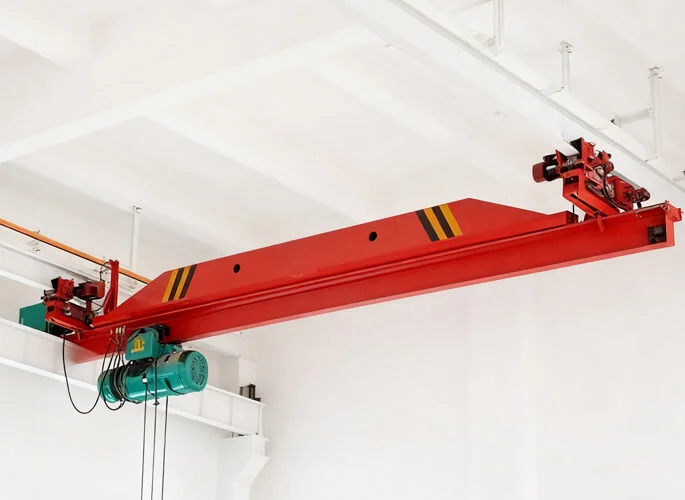
You don’t need the biggest crane for every job. The ideal crane for your purposes is the one that fits in your space, is suited for the loads you handle and your way of working. A good industrial crane should enable you to work safely and to move as much as possible without wasting time and with a minimum of maintenance.
Overhead cranes are widely used in workshops, warehouses, assembly lines, and repair shops. For light to medium duty applications, Single Girder overhead cranes are ideal. For heavier loads, greater height, and higher frequency of lift, Double Girder overhead cranes are preferred.
Gantry cranes are ideal for Outdoor yards, Long travel distances, Ports, Precast plants and large equipment storage areas. Often used when the building structure cannot support a full overhead crane.
Jib cranes are best suited for local workstations. One example for this type of lifting equipment would be a worker who has to lift motors, gearboxes or even small steel parts on a daily basis. The work then is close, simple and safe for this worker.
Hazardous sites need careful design. A small spark can become a serious accident. Chemical plants, oil and gas sites, paint workshops, flour mills, and hazardous material warehouses often need lifting equipment for hazardous areas.
Explosion proof cranes are equipped with explosion-proof motors, control boxes, buttons, limit switches as well as with spark-resistant parts. Additional protective equipment of explosion proof cranes consists of copper shock absorbers, stainless steel rims for hoist wheels as well as of sealed electrical parts and of protected cables.
It looks like you have got to the crux of the matter. Will a crane be able to lift every day safely without introducing an ignition source. You should be looking for hazardous area cranes which are supplied with a number of safety features such as; overload protection, travel limit protection, phase protection, and emergency braking. These cranes are also designed and certified to an appropriate explosion-proof grade. Some cranes are even rated ExdIIBT4 or ExdIICT4 for gaseous and dust applications, in a number of zones. The rating of a hazardous area crane will also relate to a specific application, including gas/dust type, zone and site rules.
What looks great on paper can fail in actual practice. First, the hook may not reach the load. Second, the wheel load may be too high. Third, there may be a pipe, a beam or other machine that is in the way. This happens a lot in old plants.
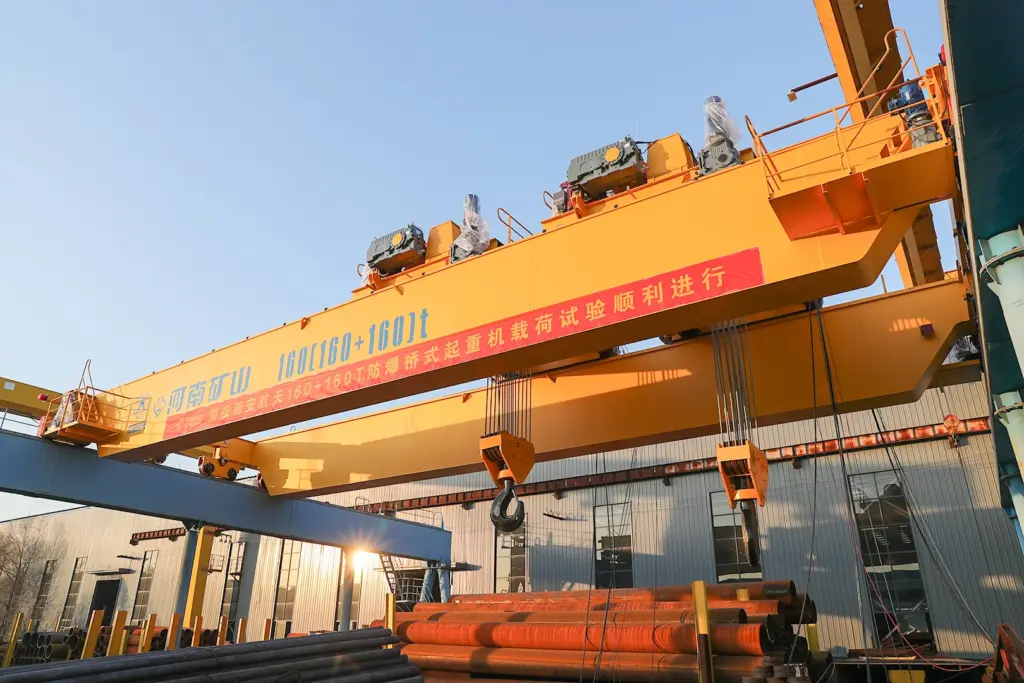
Our custom crane systems can have any special feature such as: Lift capacity, Span, Lift height, Low headroom design, Extra large span design, Anti corrosion coating, Dust proof design, Wind load on parts, Low temperature working, VFD control, PLC control, Anti sway technology, Load monitoring, Grab Buckets, Electromagnetic hook, Rotating Hooks, and Double trolley systems.
KUANGYUAN is a supplier of crane equipment as well as a service provider for projects. They offer a wide range of products including bridge cranes, gantry cranes, electric hoists as well as various parts. The company also provides design, manufacturing, installation guidance, training, spare parts as well as after-sales service. In many cases, especially where a customer’s site is far away, dirty, hot or only allows for limited shutdowns, the flow of service through the various departments of a supplier can be as important as the actual crane supplied.
There are also more products of cranes that could be compared on the basis of their capacity, structure and the site where they are working.
Before purchasing very powerful cranes it is wise to prepare the basic project data first. These are the rated capacity, the span, the lifting height, the crane travel, the duty classification, the power supply, the control type, the working environment, the material to be lifted, and special safety requirements.
Cheapest is not necessarily lowest cost. A cheap crane to lift bulk material can stop the line for loading or require repair work. A plant to handle bulk material can be equipped with grab cranes in order to save hand labor. A power plant needs better positioning of the crane for the repair work of the turbines or generators. A steel workshop needs heavy duty cranes due to the heat, dust and 24/7 nature of the work.
Preventive maintenance has to start early as well. Daily visual checks of all parts and lubrication of all sliding parts as well as of axles and hooks on a monthly basis and of all fasteners on a monthly basis too. Quarterly check of all electrical parts in order to avoid hidden failures. An annual in-depth inspection of all wire ropes, of all brakes, of all wheels, of all hooks, of all reducers, of all limit switches and of all control systems. With regular use and correct handling, the service life of a crane is often between 15 and 25 years, depending on the area of application.
Q1: How to select the proper crane for harsh environment?
A: Calculate lifting capacity, span, lifting height, duty class, work frequency, temperature, dust, corrosion, humidity and explosive hazard area. Then select the proper crane model and corresponding safety device.
Q2. Are explosion proof cranes necessary for chemical plants?
A:Yes, if the area contains explosive gas, vapor or combustible dust. This type of crane or lifting equipment may be required by site rules to be explosion proof.
Q3. What is the difference between single girder and double girder cranes?
A:Single girder cranes are typically compact in design, relatively cost effective for light to medium duty applications. Double girder cranes are designed to handle heavier loads for higher lifting heights and for more usage.
Q4. Can cranes for old workshops be customized?
A:Yes. For older workshops cranes can be better used to make better use of the available space by installing a low headroom crane, extending spans, increasing lifting height, installing special types of crane tracks or installing remote controls.
Q5. How often should be industrial cranes maintained?
A:Daily visual checks. Lubrication and fastener checks monthly. Electrical checks quarterly. Annual full inspection. Sites can be very harsh and may require more frequent checks.
 Whatsapp