Welcome to Henan Mine Crane Co.,Ltd.
Start with the periods when a transfer cart must be available. If charging can fit around those periods, battery power may suit a route where a moving supply cable would get in the way.
Where work leaves little room for charging, a cable reel may be the more useful option, subject to a suitable cable route and electrical supply.
For our transfer cart range, we suggest putting the shift record beside the route drawing before comparing quotations. “Eight hours a day” leaves a lot unanswered.
A cart waiting for a crane to unload it has a different schedule from one making consecutive trips through the busiest part of a shift.
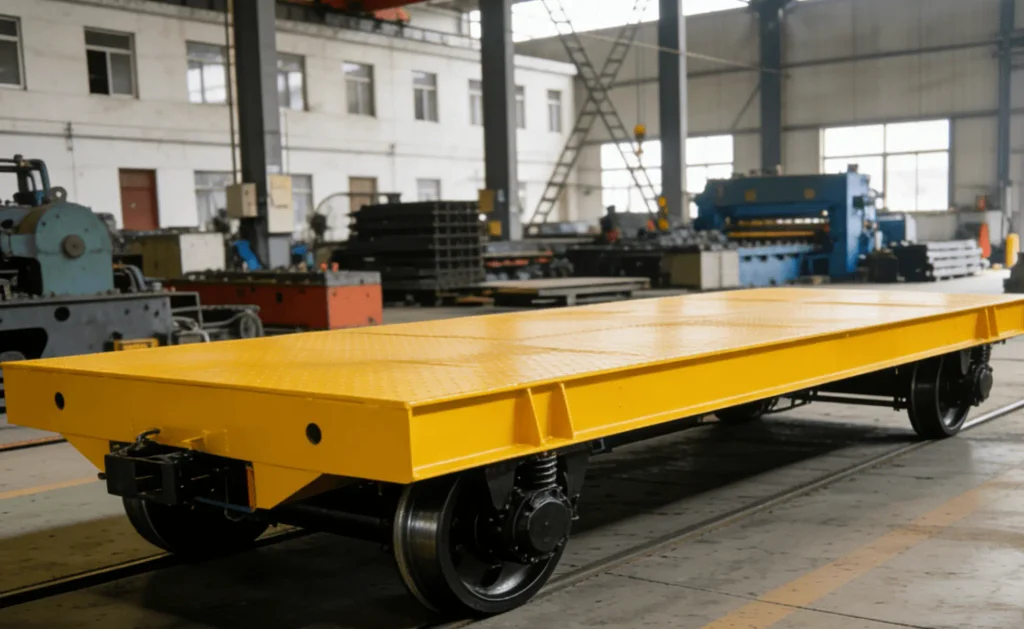
First, keep the load and handling task the same in both enquiries. Changing the deck, steering arrangement and power supply together makes the price difference difficult to explain. You need to know which change you are paying for.
Battery power does not, by itself, make a cart trackless. A battery cart can run on rails. Likewise, specifying a cable reel tells the supplier about the electrical supply, but leaves other parts of the travel arrangement to be agreed.
There is also a separate rail-fed option. Our rail-powered transfer cart page covers that system. Keep its electrical specifications out of the battery-versus-reel comparison unless the enquiry is deliberately being expanded to include a third proposal.
Once those boundaries are clear, the useful question becomes narrower: how will each proposed power system serve this particular sequence of transfers?
A useful shift record begins at loading and ends when the empty cart returns. Put the waiting periods on it too. If unloading sometimes takes longer, show that variation instead of letting a supplier count every delay as an available charging break.
Beside the timings, enter the distance travelled with a load and on the empty return. The supplier also needs trip counts, starts and stops, and details of powered equipment carried on the deck. Flag any slope for engineering review.
Do not lose the busiest run of trips inside a daily average.
Suppose, purely as a planning example, that a workshop needs most of its transfers before lunch. The quiet afternoon does not help a cart that runs short of available energy during the morning sequence.
Give the supplier both records: the full shift and that busy stretch. No battery endurance is being calculated in this example; the point is to show when the work occurs.
A few clearly labelled units will avoid another round of questions. State the load unit, put travel distances in metres and show movement and waiting periods in minutes.
If somebody later adds trips, the original assumptions remain visible and can be checked again.
With a battery cart, there is no travelling supply cable to accommodate during a transfer. Somebody on the shift must still get the cart to a charger. Work out who that will be and when the cart can be released from production.
Try walking through the proposed charging break before accepting it in the plan. The cart might still be loaded when the break begins. The way to the charger might be occupied. An urgent movement might call it back into service.
None of these possibilities should be resolved by assuming the entire break is available.
The battery and charger details need to come from the proposed equipment. In particular, a few idle minutes are not evidence that opportunity charging is permitted.
Nor should a buyer build the schedule around swapping packs before the supplier has confirmed that arrangement and its handling requirements.
Ask for the proposed operating and charging sequence in writing. It should identify the workload assumed, the conditions of use and what changes if production adds trips.
A runtime claim without those assumptions is difficult to compare and even harder to use when the schedule changes.
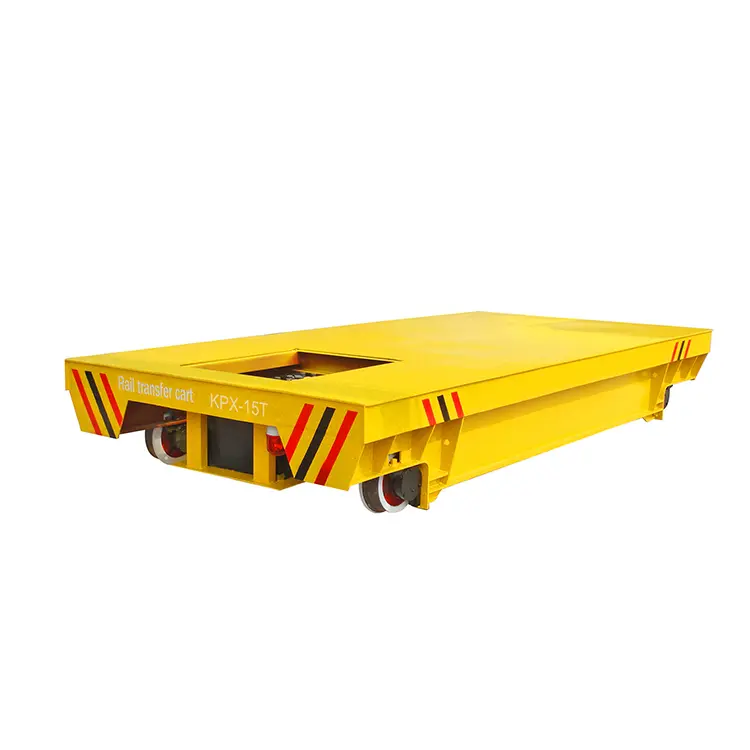
A cable reel removes battery charging from the transfer schedule. That can be useful for repeated work, but only where the complete supply arrangement fits the application.
On the drawing, include the supply point and show where the cable will be at the cart's farthest position and on its return.
Then look at the same area during production. Is a doorway crossed? Does material collect beside the track? Where do other vehicles pass? A route drawing can look quite tidy while leaving these practical details unresolved.
The proposal should explain cable guidance and protection at those locations. Also decide who will keep the route clear. That responsibility matters after installation, when temporary storage and normal workshop traffic return.
Reel selection also needs more than a distance measurement. Send the reel supplier the cart speed and acceleration, the proposed reel location and electrical demand, together with a description of the environment.
A reel selected for another installation may have been assessed against quite different conditions. Get confirmation that the cable itself is suitable for the repeated movement involved.
Read “continuous operation” carefully in an offer. An available power supply does not establish the permissible duty of every drive and control component. Have the supplier relate the proposed equipment ratings to the transfer sequence you supplied.
Start with installation. A battery-cart price might include a charger while leaving its installation to the buyer. A reel-cart offer might omit the site connection or work needed along the cable route.
Put these exclusions beside the prices before drawing a cost conclusion.
Maintenance needs the same treatment. For a battery proposal, establish the manufacturer's battery-care requirements, access for maintenance and responsibility for connector checks and charging. The maintenance team will also need a way to identify replacement parts.
Ask for that information while the proposed battery arrangement is being discussed.
On the reel side, ask how the moving cable, its guides and connections will be inspected, as well as the reel itself. Check that people can reach the inspection points after installation.
Cable damage needs to be dealt with under the site's isolation and repair procedure before returning the cart to service.
Use our equipment service support page to start the documentation discussion. Ask to review the operating instructions and suggested spares, and settle who will handle the maintenance tasks. This gives the people receiving the cart something concrete to review.
Until these items are priced, a cheaper cart may simply be a less complete offer. Keep each supplier's assumptions about interruptions beside the installed cost so the plant can judge the two proposals against its own schedule.
Work down the table with each quotation in hand. An unanswered row is something to take back to the supplier before selecting a model.
| Decision point | Battery-powered cart | Cable-reel cart |
| Route | Consider when a travelling supply cable is difficult to accommodate | Confirm a protected cable path over the complete travel |
| Busy period | Check energy demand between dependable charging windows | Confirm supply, reel and drive suitability for repeated transfers |
| Planned pauses | Verify charger access and an approved charging schedule | Check inspection and maintenance access during available pauses |
| Site preparation | Define charging location and electrical installation | Define supply point, cable guidance and crossing protection |
| Routine ownership | Assign charging and battery-care tasks | Assign cable-route and reel inspection tasks |
| Quotation basis | Require workload assumptions behind endurance claims | Require travel and duty assumptions behind continuous-operation claims |
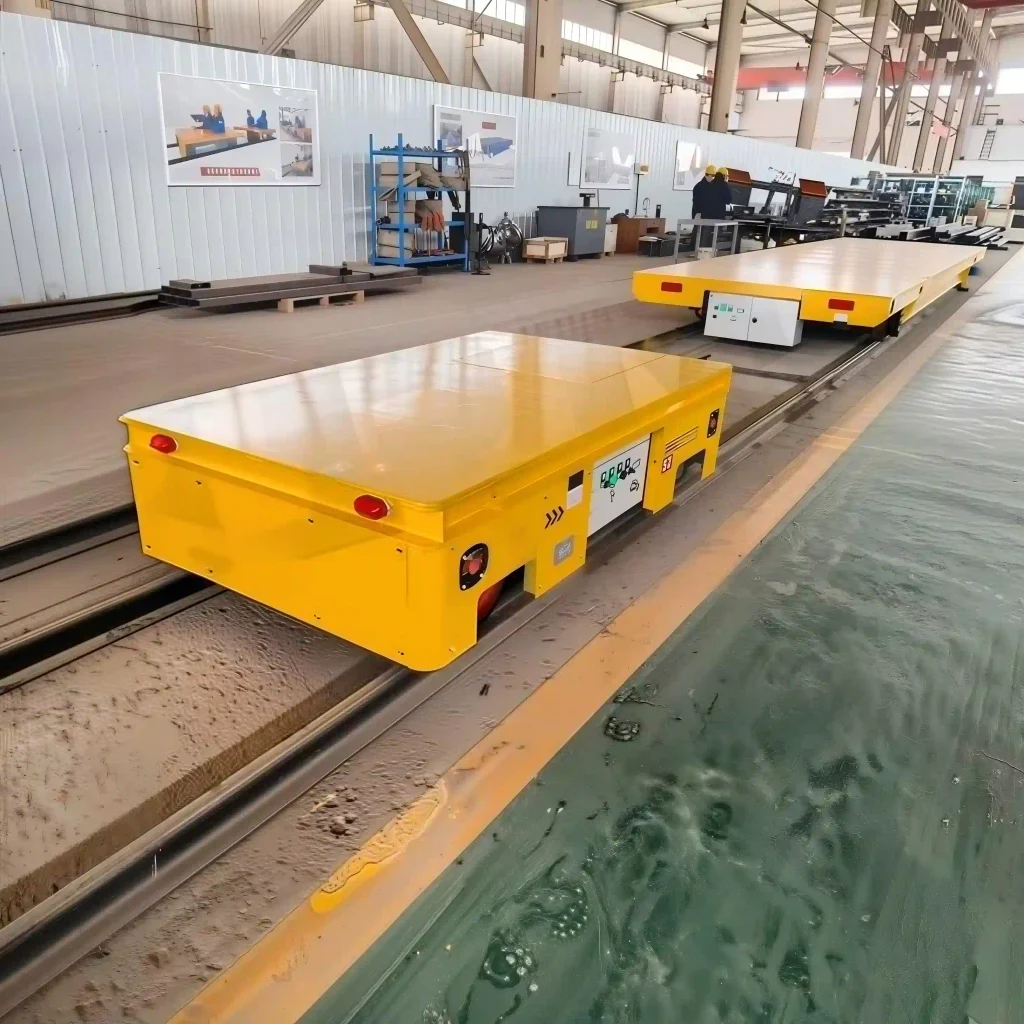
Prepare one route drawing and one shift record for both proposals. Add the load and its support arrangement, loaded and empty travel distances, peak trip frequency, available charging periods, site supply details and relevant environmental conditions.
Mark proposed future changes separately from today's requirement.
The KUANGYUAN contact page is the place to send that brief for a power-supply assessment. Ask us to set out the equipment included and the work your site would need to provide, with any open assumptions clearly marked.
Keep those answers with the drawing when the plant reviews its choice.
 Whatsapp