Welcome to Henan Mine Crane Co.,Ltd.
An annual crane inspection should be prepared as a documented review of the equipment, its operating environment and its maintenance history. The inspection interval and legal scope depend on the country, authority, crane type and site rules. A checklist helps the plant assemble evidence and identify defects, but it does not replace a qualified inspector or the crane's approved manual.
KUANGYUAN supplies industrial lifting equipment for project applications. The gantry crane product range can help a buyer identify the equipment family, while the annual review must be built around the exact crane, duty and site.

Start by identifying who is competent to perform or witness the inspection in the target market. The responsible authority may be a regulator, an employer-appointed competent person, an independent inspection body or another party defined by local rules. Do not publish one universal annual interval or claim that a checklist alone creates legal compliance.
Record the crane identification, location, owner, operator, safe working load information and the inspection standard or site procedure being used. If the crane has been relocated, modified or repaired, note that history before the inspector arrives. The inspection plan should state which records must be available and who supplies them.
Collect the nameplate or equipment identification, approved drawings and manual, previous inspection reports, maintenance records, repair and replacement history, load-test or functional-test records, operator observations and outstanding corrective actions. Keep the documents tied to the same crane and location.
Look for open defects that were carried forward without a recorded close-out. An annual inspection should not become a fresh list that ignores last year's unresolved item. Mark the condition, interim restriction, responsible person, target date and evidence required for closure.
The record pack also helps an inspector understand changes. A new hoist, altered runway, repaired girder, replaced brake or modified control system may require a more focused review than a routine visual walk-around.
The structural review should cover the areas defined by the approved inspection method: girders, legs, end carriages, runway interfaces, connections, weld zones, rails, wheels, buffers, access platforms and visible corrosion or deformation. The exact scope depends on the crane design and local requirements.
Mechanical items may include hoist mechanisms, drums, ropes or chains, sheaves, hooks, brakes, gearboxes, couplings, bearings and lubrication points. Record the identification and condition of each item rather than writing only “checked.” Photographs can help link an observation to a location, but they do not replace the inspector's measurement or judgement.
Do not invent acceptance limits. Wear, cracks, distortion and corrosion must be assessed against the relevant manual, standard or qualified inspection method. A component that appears acceptable in a photograph may still require a close examination or non-destructive test.
The electrical and controls review should identify the main isolator, control stations, pendant or radio controls, emergency stops, limit switches, overload or load-limiting devices, alarms, interlocks and travel controls that apply to the crane. Test each item using the approved procedure and record the result and any restriction.
Check that control labels are legible and that an operator can understand the status of the equipment. Inspect cable routing, enclosures, grounding and visible damage according to the qualified method. Outdoor cranes may need additional attention to weather exposure, water ingress and corrosion at electrical interfaces.
Functional testing should cover motions and brakes under controlled conditions. Keep people outside the exclusion area and follow the site's lifting and isolation rules. A test that is not safe to perform should be stopped and escalated, not forced to complete a form.
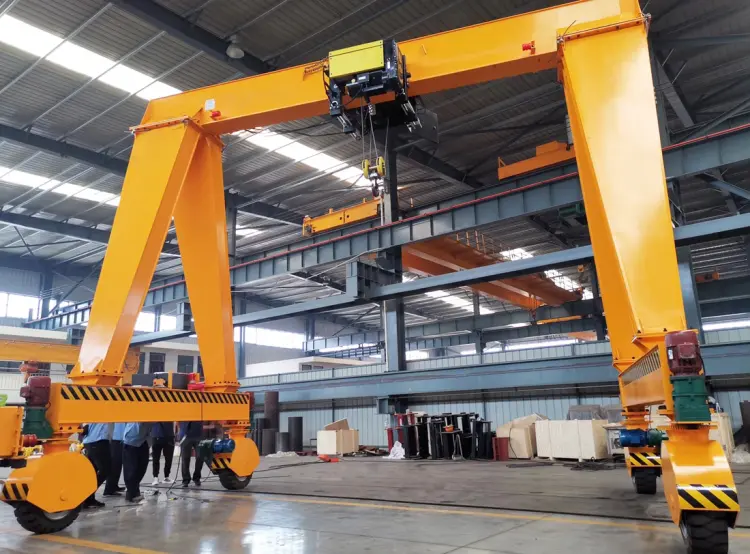
The truss-type gantry crane page illustrates why the inspection record should identify the actual structure and configuration instead of using a generic crane description.
Separate observations into conditions that require immediate restriction, corrective work before continued operation, monitoring with a defined date, and items that are acceptable with no action. The classification must follow the responsible inspector's judgement and applicable rules.
If a defect affects a load-bearing part, brake, hook, rope, limit device, emergency stop or other safety-critical function, the plant should follow its isolation and restriction procedure. Do not let production pressure turn an open safety item into an informal exception.
Each corrective action should name the defect, exact location, action owner, required evidence, target date and release authority. If a replacement part is needed, record the part identity and approval route. A repair is not complete until the responsible person confirms the post-repair inspection or test.
The final package should include the signed or otherwise authorized inspection record, defect list, photographs or measurements where relevant, repair documents, test results, restrictions, close-out evidence and the date of the next required review. Keep the package accessible to the operator and maintenance team.
Compare the final record with the crane identification. A report with the wrong equipment number can create a serious traceability gap even when the inspection itself was competent. Store the record with the maintenance system and make sure changes to the crane are added before the next review.
Before the inspector arrives, arrange safe access, isolation support, operator availability, maintenance records, lifting or test equipment required by the approved method, and a person who can explain the crane's operating history. Keep the inspection area clear and control access during functional tests.
Ask operators to report unusual noise, drift, brake behavior, control faults, vibration, rope or chain changes, collision, overload events and repeated alarms. Their observations do not replace the inspection, but they can direct attention to intermittent conditions that a short visit may miss.
For project-specific equipment documentation, maintenance questions or a new crane review, use the contact page. Confirm local legal requirements and the competent inspector's scope before relying on any annual checklist.
Outdoor cranes should be reviewed in the context of the site. Record exposure to rain, dust, salt, high wind, temperature changes, standing water, nearby process chemicals and vehicle impact. Look for changes in coating, drainage, access, electrical enclosures and runway condition that may not appear in an indoor inspection.
If the plant has experienced a storm, collision, overload event, unusual sway or unplanned stop, add the event and the follow-up evidence to the inspection pack. The purpose is not to claim a universal wind limit. It is to tell the competent inspector what changed and what needs a focused check.
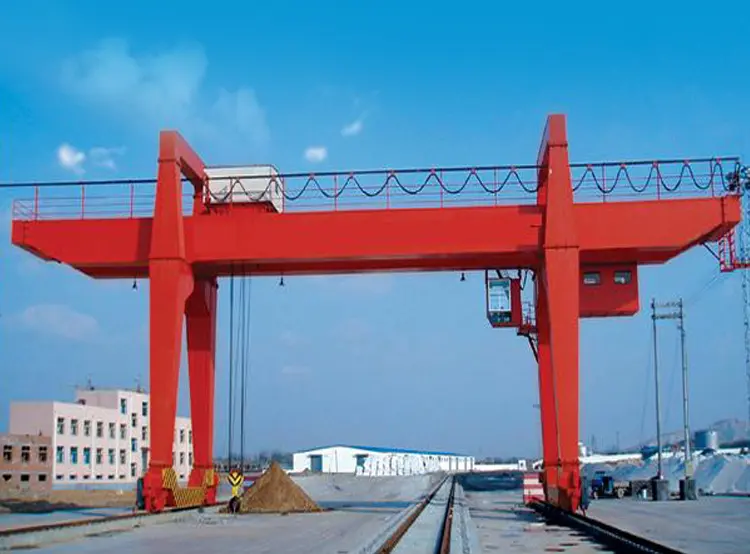
The outdoor gantry crane weather guidance can support a preparation conversation, but the site's own operating procedure and local requirements control the response. Keep temporary shutdown, tie-down, isolation and restart responsibilities clear in the plant record.
After the inspection, brief the operator and maintenance team on the restrictions, repairs and restart conditions. The handover should say who can release the crane, where the updated report is stored and which observations must be reported before the next scheduled review. This closes the loop between inspection and daily operation.
The inspection file should also identify the next review trigger when it is earlier than the normal cycle. A major repair, relocation, overload event, structural change, safety-device replacement or long period out of service may require a new assessment under local rules. Record that decision with the report so the plant does not rely on the calendar alone.
Use the close-out meeting to confirm that the operator understands any temporary restriction. A signed form is useful only when the people who control the crane know what changed and who can
| Checklist block | What to review | Evidence to keep | If an issue is found |
| 1. Authority and scope | Confirm the applicable authority, competent inspector, local rules and crane-specific scope. | Inspection standard or site procedure; crane identity and location | Do not rely on one universal interval. |
| 2. Records | Gather the manual, drawings, prior reports, maintenance and repair history, tests and open actions. | A record pack tied to the same crane | Flag unresolved items and changes for focused review. |
| 3. Structure and mechanics | Review load-bearing parts, running gear, hoist components, hooks, ropes or chains, brakes and visible damage. | Item-by-item condition notes and relevant photos or measurements | Assess against the approved method; do not invent limits. |
| 4. Controls and safety devices | Test isolators, controls, emergency stops, limit devices, alarms, interlocks, travel controls and brakes. | Approved test results and any operating restriction | Stop and escalate an unsafe test. |
| 5. Defects and corrective action | Classify defects, restrict unsafe equipment and assign each action an owner and target date. | Defect list, restriction, action owner and required evidence | Release equipment only through the responsible authority. |
| 6. Close-out and site context | Record repairs, close-out evidence, operating conditions, weather or incident history and the next review trigger. | Authorized final record stored with maintenance files | Brief operators on restrictions, repairs and restart conditions. |
 Whatsapp