Welcome to Henan Mine Crane Co.,Ltd.
A box girder and a truss girder present different structural forms to the same gantry-crane project. The practical choice depends on rated load, span, lift, duty, wind exposure, transport route, site assembly, corrosion environment, inspection access, and the actual scope included in the price. Neither form is always more wind resistant or always cheaper.
KUANGYUAN supplies both truss-type single-girder gantry cranes and other gantry configurations. We use the project's operating and site data to develop a proposal. This comparison helps buyers prepare those inputs; it does not replace structural calculations for a specific crane.
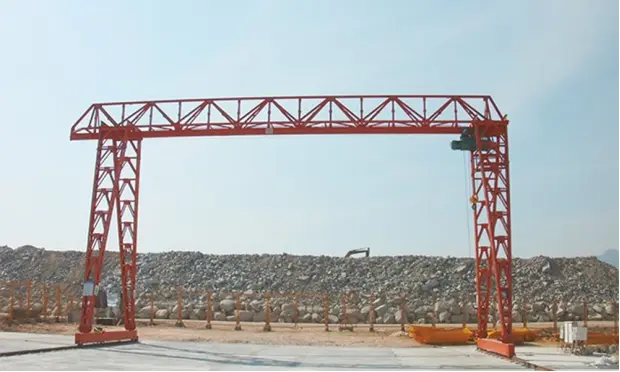
Start with the load and working area. Provide the rated load, lifting attachment weight, span, lift height, travel length, operating frequency, control method, and any unusual load behavior. A girder comparison without these inputs is only a visual preference.
Then define the outdoor exposure. Record the site location, governing design basis, terrain and surrounding obstructions, prevailing severe-weather concerns, and the crane's parking arrangement. The design team needs project wind data and operating rules rather than a universal wind-speed number copied from another site.
Our guidance on preventing wind and storm damage to outdoor gantry cranes explains the wider operating and securing questions. Girder form is only one part of the response. Crane orientation, wheel loads, travel system, rail clamps or other securing devices, parking position, and site procedures also need project-specific review.
A box girder uses enclosed plate construction. A truss girder uses connected structural members with open areas between them. The open form can present less solid area to wind in some configurations, while the enclosed form provides a continuous closed section. The engineering result still depends on the complete geometry, member sizes, span, loads, and design conditions.
Do not convert that qualitative distinction into a blanket performance claim. A truss needs members, connections, bracing, and sufficient stiffness for the specified crane. A box needs platework, internal detailing, welds, and access provisions appropriate to the design. Both can be engineered for suitable projects.
The useful procurement question is: which form supports the required crane while fitting the site's environmental, transport, fabrication, and maintenance constraints? The supplier should answer with project drawings and calculation-based design, not a claim that one form wins every comparison.
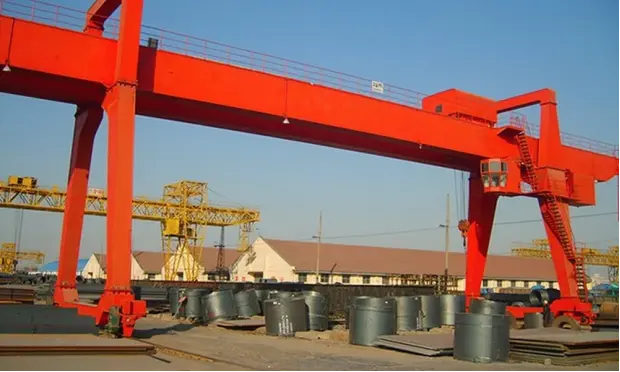
Transport can influence the cost difference before the crane reaches the site. Provide the delivery route, port and inland restrictions, available transport length and width, lifting resources, laydown area, and site assembly conditions. A long or deep girder may require shipment sections regardless of structural form.
An open truss may offer fabrication or shipping options that suit one route, but it can also involve multiple members and connections to protect, identify, assemble, and inspect. A box section may have a different shipping envelope and sectional-joint strategy. The proposal should show how the selected structure is divided, transported, assembled, aligned, and erected.
Site access matters as much as vehicle dimensions. Check crane access, temporary lifting position, ground bearing conditions, work-at-height controls, power availability, and interference with existing production. The lowest equipment quotation is not the lowest installed cost if the assembly plan is incomplete.
Ask suppliers to state the largest and heaviest shipping section proposed, where field joints occur, and which temporary supports or cranes are assumed. Those answers allow the buyer to test the concept against roads, gates, laydown space, and erection resources before accepting the structural option.
Outdoor steelwork needs a corrosion-protection plan matched to the project environment and maintenance regime. Coastal air, industrial contaminants, humidity, water traps, and difficult access can influence coating selection and inspection intervals. The exact system should be specified for the site rather than assumed from the words box or truss.
Truss construction exposes more individual members, connection areas, and surfaces to visual inspection. Those same details may increase the number of locations that require coating attention. Box construction has broad external surfaces, while enclosed areas, weld details, drainage, and access provisions need appropriate design and inspection planning.
Ask the proposal to identify surface preparation, coating scope, excluded areas, access provisions, drainage details, and the maintenance assumptions used. Unsupported coating life should not be treated as a guaranteed project outcome.
Compare equal scopes. Include the main girder, legs, end carriages or travel assemblies, hoisting system, electrics and controls, power supply interface, wind-securing arrangements, platforms and access, coating, packing, freight, site assembly, erection equipment, testing, commissioning, and documentation.
Separate initial purchase cost from lifecycle inputs. Record inspection access, coating maintenance, replacement access, likely production interruption for planned work, and any site resources assumed by the supplier. These items may not produce a universal numeric advantage, but they expose cost that a bare equipment price leaves outside the comparison.
Use qualitative fields until the supplier has project data:
| Cost and selection field | Box girder concept | Truss girder concept |
| Wind area | Depends on complete geometry and design | Open geometry may reduce solid area, subject to engineered configuration |
| Structural design | Closed plate section | Open member-and-connection system |
| Shipping envelope | Confirm girder dimensions and shipment joints | Confirm member or section dimensions and shipment joints |
| Site assembly | Depends on sectional design and erection plan | Depends on member or section design and erection plan |
| Corrosion review | External surfaces plus enclosed-detail and drainage review | Multiple exposed members, connections and coating-access points |
| Inspection access | Project-specific external and internal provisions | Project-specific access to members and connections |
| Fabricated cost | Quote for the actual load, span and design basis | Quote for the actual load, span and design basis |
| Installed lifecycle cost | Add freight, erection, coating and maintenance plan | Add freight, erection, coating and maintenance plan |
KUANGYUAN also supplies a truss-type double-girder gantry crane and box double-girder gantry-crane configurations. These pages show that girder form and single-versus-double-girder arrangement are separate decisions. Do not compare a single-girder truss price with a double-girder box scope and attribute the difference only to the structural form.
A comparable request for quotation should give each supplier the same design inputs and commercial scope. Include load, span, lift, travel, duty information, power supply, control requirements, site wind data, operating temperature and environment, rail or ground conditions, transport limits, assembly resources, coating expectations, and required documents.
Ask for a general arrangement drawing, stated design inputs, shipment split, erection responsibilities, included safety and wind-securing features, coating scope, testing plan, and exclusions. The proposal should make unknowns visible rather than filling them with generic numbers.
During bid review, place deviations beside the common request. One supplier may exclude rails, power supply, erection supervision, or local testing while another includes them. Normalize those differences before comparing totals, and keep structural form separate from changes in capacity, duty, hoist arrangement, or commercial terms.
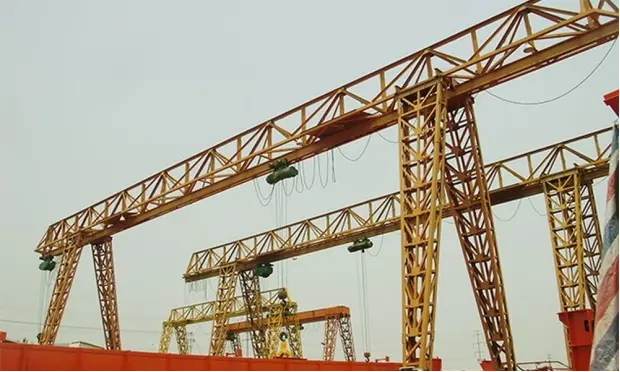
An open truss can be attractive where wind area and transport strategy favor that concept. A box girder can be attractive where an enclosed plate section fits the engineered crane and project delivery plan. Either conclusion must survive the same checks for load, span, stiffness, wind, fatigue and duty, shipping, erection, corrosion, access, and lifecycle cost.
Review our overview of general gantry-crane uses when defining the application, then keep the girder decision tied to the specific site. This comparison does not cover portal slewing cranes and should not be used to select one.
Send the rated load, span, lift height, duty, wind region or project wind basis, site layout, transport limits, corrosion environment, and erection conditions through our contact page. KUANGYUAN can prepare an engineered gantry-girder review and show how the box and truss concepts affect the actual proposal scope.
 Whatsapp