Welcome to Henan Mine Crane Co.,Ltd.

An outdoor Gantry Crane can keep steel, precast concrete, timber, pipe, and stone moving when a building cannot cover the whole yard. Wind can turn a steel plate, spreader beam, or empty hook into a moving hazard. You need a clear wind plan, reliable anchoring, and a simple rule for stopping work.
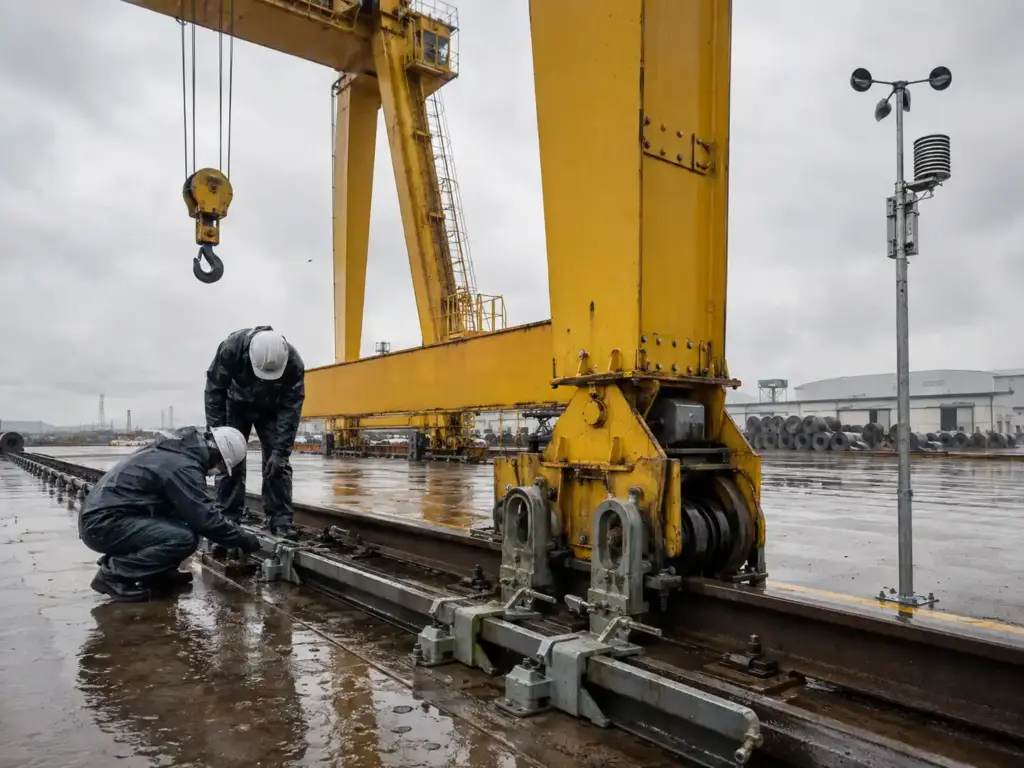
img.Outdoor gantry crane lifting steel plates in stormy weather.webp
Wind does not need to lift the crane off its rails to cause trouble. It can move a parked structure, swing a suspended load, increase wheel pressure on one side, or push water into electrical cabinets.
Steel sheets, sandwich panels, doors, insulation boards, and empty skips catch wind quickly. A bundle that feels stable on the ground can pull hard against the hook once it is raised. Keep large panels secured until the crane is ready to lift, and use tag lines where the lifting plan allows them. Never ask a worker to hold a swinging load.
An unloaded Gantry Crane may have less resistance than you expect. If the rails are wet or slightly sloped, wind can overcome the parking brake or wheel resistance. For a double girder Gantry Crane, the parking position, rail clamps, storm anchors, and wheel brakes must be treated as one system. Otherwise, the crane can run into end stops or nearby equipment.
Wind protection is only useful when the team knows which number controls the decision. Do not copy a limit from another crane. Check the crane's rated operating wind speed, out-of-service wind speed, load restrictions, and any special limit for large-area loads in the manual and site risk assessment.
An anemometer mounted near the working level gives a more useful reading than a weather app several kilometres away. Record gusts, not only the average speed. If the display is unreliable, work should stop until a competent person confirms conditions.
A light breeze may be acceptable for a compact steel bundle and unsafe for a long truss. The lifting plan should state how the load's size, centre of gravity, and lifting points change its wind response. Plan the route with enough clearance for controlled movement.
Storm preparation should be a short, repeatable checklist. Assign one person to confirm the crane is parked and isolated, then have another verify the physical restraints.
Move the crane to the position shown in the manufacturer's instructions or the site's engineered plan. Lower the hook and remove any suspended load. Place the trolley and hoist where they cannot strike the legs or end stops. Engage rail clamps, storm anchors, or tie-down devices designed for the crane. Do not improvise with loose chains.
Sheets, pallets, tarpaulins, scaffold boards, and empty containers can hit the crane or block its wheels. Clear them from the rail corridor and nearby travel path. Check drainage so standing water does not hide a rail obstruction or weaken a temporary foundation.
After parking and securing the crane, follow the site isolation procedure. Protect electrical cabinets from driving rain, close doors and cable glands, and do not leave a pendant controller lying in water.
Good design lowers exposure, but no feature replaces a weather decision. When you specify a Gantry Crane, ask how the complete system behaves when it is working, parked, and out of service.
Rail clamps grip the rail when the crane is parked. Storm anchors or engineered tie-downs provide additional resistance where local wind conditions demand it. A rail mounted container Gantry Crane shows why restraint design cannot stop at the wheels. Ask for the design wind load, anchor arrangement, rail details, and foundation reactions. The rail, clips, end stops, and concrete base must work together.
Travel brakes should hold the crane at the designated parking point, while end stops and buffers limit unwanted movement. Test them during planned maintenance. Limit switches and anti-collision devices also need inspection after impact, flooding, or a hard stop.
Outdoor-rated enclosures, cable protection, drainage, and suitable seals reduce rain-related faults. Ask whether the control panels, motors, festoon systems, and limit switches match the yard's exposure. Salt air and cement dust also deserve attention.
Once the stop-work trigger is reached, lower the load only if the responsible person confirms it can be done safely, then leave the crane in its approved safe state. No one should climb onto the structure during lightning, high winds, or flooding.
Look for displaced rails, shifted foundations, bent end stops, damaged wheels, loose bolts, twisted bracing, and impact marks. Check clamps, travel, cables, control cabinets, motors, brakes, and emergency stops for water ingress. If the crane moved unexpectedly, isolate it and arrange a competent inspection before energising it again.
Stormwater may undermine a track even when the rail looks straight. Recheck ground bearing, drainage, nearby stacks, access roads, and overhead services. Clear the route and update the risk assessment before the first test lift.
The best storm plan is supported by ordinary habits. Mark the storm parking bay, paint the rail corridor, label isolation points, and keep the anemometer visible. A bridge girder Gantry Crane may handle long structural sections, so the pre-shift check should cover weather, restraints, brakes, rails, and the planned load. Train contractors as well as permanent staff.
Keep a log of wind alarms, near misses, clamp tests, and post-storm inspections. Repeated wheel slip after rain may point to drainage or rail contamination rather than a crane defect. Fixing it early is cheaper than waiting for a storm.
Henan Mine Crane Co., Ltd. designs, manufactures, and sells overhead cranes, Gantry Cranes, electric hoists, and related equipment. Its official service information covers custom solutions, turnkey delivery, staff training, and after-sales support. This is useful when a building-material yard needs outdoor lifting plus safe storm parking. Share the wind zone, rail layout, foundation drawings, load schedule, and storm procedures when you request a site-specific crane proposal. Those details help the supplier size travel restraints and electrical protection around the real site instead of a generic catalogue arrangement.
These answers cover common yard decisions.
A: Often yes, if the manufacturer permits it and visibility, traction, electrical protection, and wind remain within the approved limits. Rain alone is not the only factor.
A: The correct combination of a designated parking position, rail clamps or storm anchors, brakes, and a tested isolation procedure. One device should not carry the whole responsibility.
A: No. Lower the hook and remove the load. Position the trolley and hoist as specified by the crane's storm-parking instructions.
A: No. Inspect the crane, rails, foundation, electrical parts, and surrounding yard first. A competent person should clear the crane if movement, impact, flooding, or structural damage is suspected.
A: No. Use a calibrated site anemometer and compare gusts with the crane's rated limits and lifting plan. The stricter requirement controls.
 Whatsapp