Welcome to Henan Mine Crane Co.,Ltd.
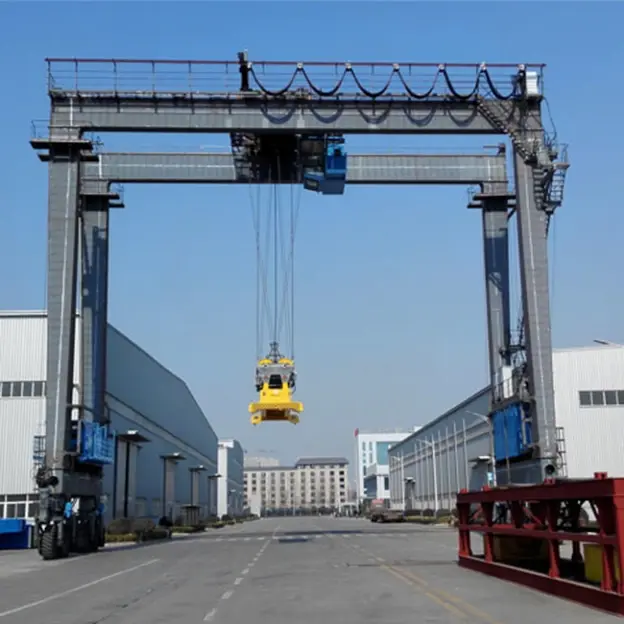
A China RTG crane purchase should start with yard geometry, container weight, stack height, power strategy, automation needs and supplier proof, not with a bare price request.
Global buyers search for RTG cranes because they need container-yard capacity without committing every operating lane to rails. The right machine can improve stacking density, keep truck lanes moving and give a terminal room to change its layout as volume grows.
A weak inquiry, however, usually brings a weak quotation. "40 ton RTG crane price" sounds specific, but it leaves out span, lifting height, power mode, steering, spreader type, duty class, climate and after-sales support. Those details decide the actual crane design.
An RTG crane, or rubber tyred gantry crane, travels on rubber tyres instead of fixed rails. It is mainly used in container yards, intermodal terminals, inland dry ports and large logistics yards where containers must be stacked, picked and moved across flexible lanes. KUANGYUAN offers a dedicated rubber tyre gantry crane page for this application.
Buyers usually choose an RTG when the yard needs mobility. A rail mounted gantry crane suits a fixed high-throughput block, while an RTG can move between blocks, serve different truck lanes and adapt when a terminal changes the container flow. That flexibility matters for new terminals, seasonal cargo peaks and yards that are still being expanded.
The trade-off is that an RTG needs careful control of tyre wear, pavement condition, steering accuracy, fuel or power strategy and operator visibility. A buyer should treat the crane, yard surface and operating process as one system.
A useful RFQ should tell the supplier how the yard actually works. Start with the rated lifting capacity under spreader, container type, maximum container weight, stack height, span over container rows, truck lane arrangement and expected moves per hour. Add the local voltage, ambient temperature, wind condition, humidity, dust and any coastal corrosion risk.
The buyer should also define the spreader, hoisting speed, trolley speed, crane travelling speed, wheel arrangement, diesel or electric power preference, control cabin position, remote-control requirements, anti-sway requirement and monitoring interface. If the terminal may later automate part of the operation, state that before engineering starts.
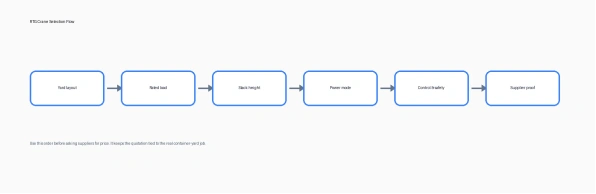
For documentation, ask for the general arrangement drawing, wheel-load data, electrical schematic, main steel-structure material, motor and brake brands, coating plan, factory acceptance test scope, spare-parts list and installation responsibility. A complete technical package reduces the chance that two suppliers quote different machines under the same title.
Power choice is one of the biggest 2026 buying decisions. A diesel RTG is still attractive where the yard lacks electrical infrastructure or where the crane must move between separated working areas. It is simple to deploy, but the buyer has to budget for fuel, emissions rules, maintenance and noise.
Hybrid RTGs use stored energy and engine management to reduce fuel use in repetitive lifting cycles. They make sense when a terminal wants lower fuel consumption but cannot fully electrify the block yet. The control system, battery support and local service capability should be checked before purchase.
Electric RTGs, including cable reel and busbar-style options, fit yards with a stable layout and a stronger push toward lower emissions. The decision depends on yard civil work, power supply, cable management, emergency movement, and whether the crane must cross traffic routes. For many buyers, the question is not only equipment price. It is the total cost of power infrastructure, uptime and service support.
RTG and RMG cranes solve similar container-handling problems with different assumptions. The port equipment range usually needs both ideas in the planning stage, even if the final project buys only one type.
| Decision point | RTG crane | RMG crane |
| Yard flexibility | Moves between container blocks and lane layouts. | Works best in a fixed rail block. |
| Civil work | Needs suitable pavement and traffic control. | Needs rails, foundations and alignment control. |
| Power plan | Diesel, hybrid or electric options are common. | Often tied to fixed electrical infrastructure. |
| Best fit | Growing yards, mixed cargo flows, flexible terminal planning. | High-density blocks with stable traffic and long-term layout certainty. |
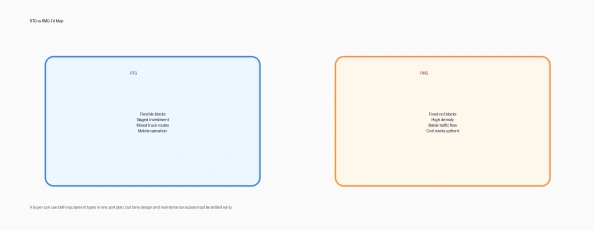
Choose RTG when the yard values flexible routing, staged investment or mixed operating blocks. Choose a rail mounted container gantry crane when the container block is fixed, throughput is predictable and the terminal can invest in rail foundations from the start.
Some buyers use RTGs for flexible storage blocks and RMGs for rail or high-density blocks. That mixed strategy can work, but it requires early traffic planning so truck lanes, pedestrian zones and maintenance access do not collide.
A good China RTG supplier should show manufacturing control, not just a finished product photo. Review the steel cutting process, welding procedure, nondestructive testing, machining accuracy, wheel assembly, electrical cabinet layout, paint system and final test plan. The wider gantry crane product line is also useful evidence because RTG engineering still depends on heavy gantry structure, travel mechanisms and lifting control.
Ask how the supplier controls anti-sway, skew correction, overload protection, limit switches, emergency stop, wind alarm, lighting, access platforms and operator visibility. For port projects, the buyer should also confirm tyre specification, turning mode, spreader interface and whether the crane can support remote monitoring or automation upgrades later.
Factory acceptance should include dimensional inspection, electrical function testing, safety-device checks, mechanism trial operation and packaging inspection. If the project is high value, third-party inspection before shipment is usually cheaper than finding a mismatch after the crane arrives at port.
The same nominal RTG capacity can lead to very different project budgets. Span, lifting height, wheel load, steel structure weight, power supply, automation level, spreader scope, shipping route, local installation team and civil work all change the final cost.
Buyers should avoid comparing quotations by headline capacity alone. A lower price may exclude spreader, cable system, spare parts, commissioning, operator training, remote support or documentation. A higher quote may include stronger steel structure, better control components, a safer inspection scope or overseas installation support.
A practical quote request should include a yard layout drawing, target container stack, local standards, working hours per day, container mix, expected lifetime, power preference and required delivery date. If the terminal has not fixed the layout, ask the supplier for two options so the buyer can compare equipment cost against civil-work cost.
Before signing, buyers should verify the manufacturer, the design basis and the service path. The Henan Mine Crane company profile is a starting point for checking production background, export experience and project support.
The best RTG quote is easy to audit. A buyer should be able to trace every major price item back to a design choice, a site condition or a service promise.
RTG means rubber tyred gantry crane. It is a mobile gantry crane that runs on rubber tyres and handles containers in yards, ports, terminals and intermodal logistics sites.
Neither type is automatically better. RTG is usually better for flexible yard layouts and staged investment, while RMG suits fixed high-density blocks with rail foundations and predictable traffic flow.
Send container weight, stack height, span, truck lanes, operating hours, power preference, climate, local standards, automation needs, site drawing and delivery schedule. More site detail usually means a more accurate quotation.
Yes. Electric RTG configurations are common where the yard can support cable, busbar or charging infrastructure. The buyer still needs a plan for crane movement, emergency operation and cable protection.
The main risk is comparing incomplete quotations. A low headline price may omit spreader scope, power infrastructure, commissioning, spare parts, inspection, training or after-sales support.
For a serious quotation, send KUANGYUAN the yard layout, target capacity, power preference and delivery timeline. A technical comparison at the inquiry stage is the simplest way to avoid a costly redesign later.
 Whatsapp