Welcome to Henan Mine Crane Co.,Ltd.
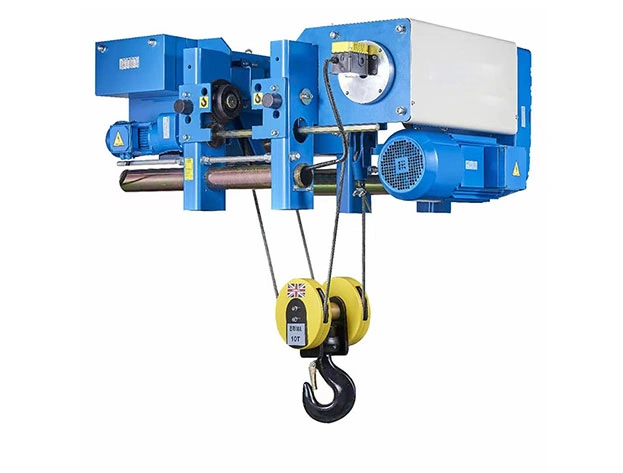
A low headroom electric hoist is the right choice when the building height is fixed but the load still needs more usable hook travel. By placing the hoist body and trolley closer to the beam or crane girder, the design reduces wasted vertical space above the hook. For buyers, the real question is not only how many tons the hoist can lift. It is whether the final hook position, beam size, lifting height and safety devices all fit the workshop without forcing costly building changes.
At KUANGYUAN, we often see this requirement in old factory renovations, compact machining bays, warehouses with low roof trusses and production lines where a new crane must fit around existing equipment. Our goal is simple: use the available steel structure better, keep the hoist easy to inspect, and avoid promising hook height that the installed system cannot deliver.
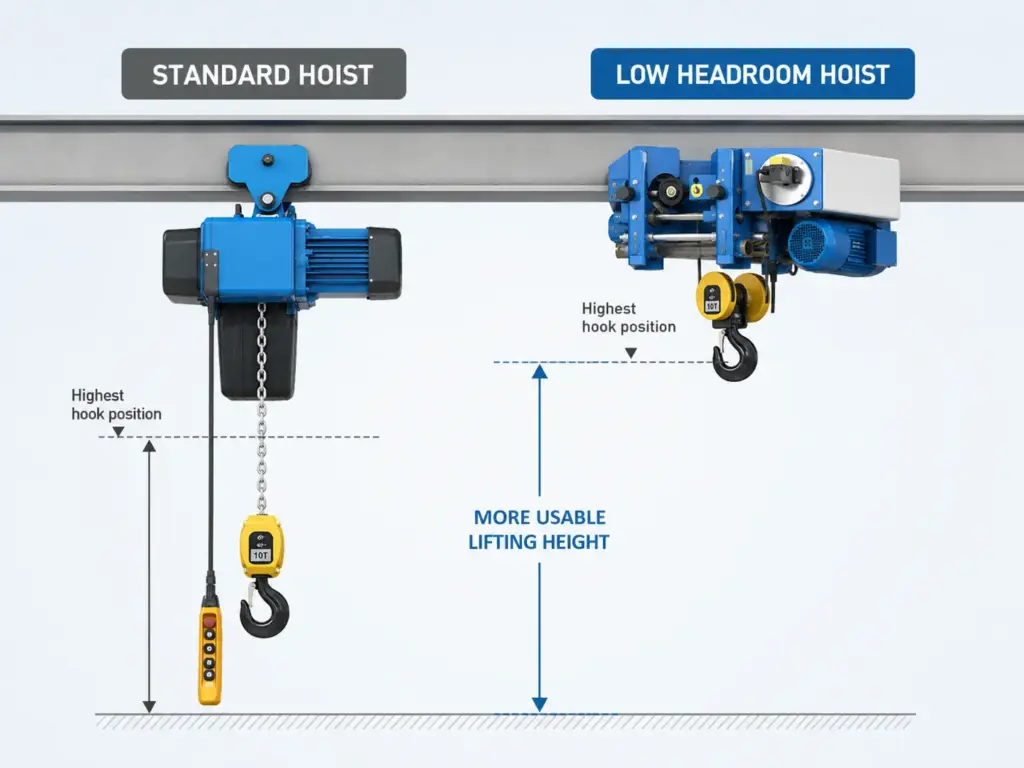
A low headroom electric hoist is an electric lifting unit arranged to reduce the distance from the beam or girder underside to the highest practical hook position. In normal buyer language, it helps the hook get closer to the runway beam. This matters when every 100 mm of vertical clearance changes whether a mold, motor, steel coil or machine module can clear the floor fixture.
The term usually points to a compact trolley layout, offset hoist arrangement, shorter hook approach, or European-style hoist structure. The hoist may use wire rope or chain depending on capacity, duty and lifting height, but this article focuses on the low headroom electric hoist as one solution for tight spaces. Buyers comparing our electric hoist range should treat low headroom as a design requirement, not a decorative option added at the end of the quotation.
Low headroom design matters most when the building cannot easily be raised and the load still needs a full working lift. In a machining workshop, the hook may need to lift parts over fixtures and then move them into a machine bed. In a warehouse, operators may need to lift pallets or packed machines clear of racks. In a maintenance bay, the hoist may need to remove motors or pumps from tight pits where the load starts low and the beam sits close to the roof.
The design also matters in renovation projects. Replacing an old hoist with a standard new unit can reduce the original hook height if the trolley, drum, hook block or electrical layout becomes larger. That is why we ask for existing beam data and measured clear height before recommending a model. A low headroom hoist can save money when it avoids civil work, but only if the beam, runway and electrical clearance support the arrangement.
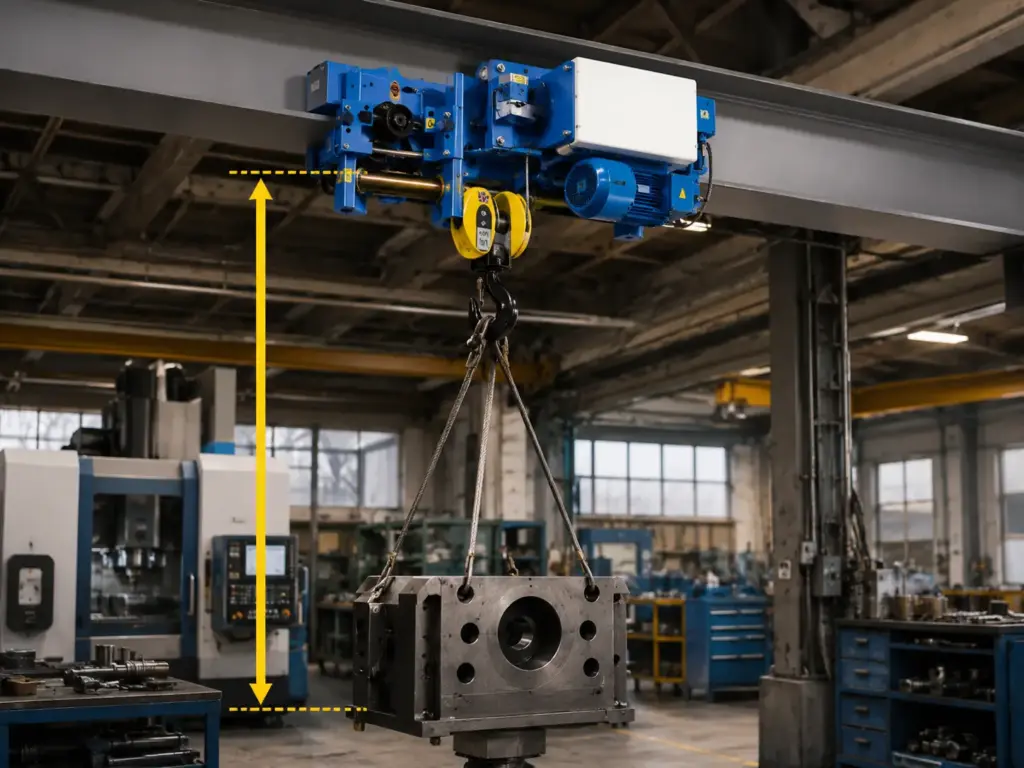
The useful lifting height is decided by the whole path from floor to hook, not by the catalog lift number alone. Buyers should confirm clear building height, beam bottom elevation, beam flange width, beam depth, trolley wheel path, hook block size and required safe clearance above the load. OSHA defines clearance as the distance from any part of the crane to the nearest obstruction, which is a useful way to think about tight workshops. The final design must leave room for operation, inspection and safe stopping, not just for a static drawing.
The most common mistake is to request a 6 m or 9 m lift without telling the supplier the building height and beam position. A hoist can be supplied with longer rope, but the hook still cannot move through the beam. For wire rope applications, our electric wire rope hoist data covers 0.5 to 32 tons with 6 to 50 m lifting height, yet the installed hook height still depends on the trolley and crane structure around it.
Start with the load, then move to space. The rated capacity must include the heaviest real load, lifting device and any fixture weight. Next, define duty. A hoist used a few times per shift in maintenance does not face the same heat, brake wear or motor demand as a hoist feeding a production line. ASME B30.16 covers construction, installation, operation, inspection, testing and maintenance for overhead underhung and stationary hoists, including electric-powered chain and wire rope hoists. That scope is a good reminder that selection is never only a capacity question.
| Required input | Why it matters for low headroom selection |
| Rated load and lifting device weight | Sets hoist capacity, rope or chain choice, motor size and brake demand. |
| Clear height and beam bottom elevation | Decides the highest possible hook position after the hoist is installed. |
| Beam flange width and depth | Confirms trolley fit, wheel load and available space above the hook block. |
| Required lift height and hook approach | Shows whether the project needs a low headroom trolley or another crane layout. |
| Working frequency and duty | Protects motor, brake, rope, chain and gearbox service life. |
| Voltage, control mode and environment | Affects electrical design, pendant or remote control, enclosure and protection grade. |
For tight workshops, we usually ask for a simple drawing or measured sketch before quoting. Mark the floor level, runway beam, roof truss, nearby columns, lights, pipes and any equipment that the hook must pass. If the hoist will run on a single girder electric hoist crane, beam geometry and crane approach dimensions should be checked together. The buyer gets a clearer answer when the supplier can calculate the hook height from actual site data instead of guessing from a product name.
A compact hoist still needs room for safe components. Brakes, limit switches, rope drum, rope guide, hook block, trolley wheels and electrical controls must match the load and working condition. OSHA requires hoist holding brakes on independent hoisting units and also lists frequent and periodic inspection items for hooks, ropes, brakes, limit switches and other parts. In practice, this means the low headroom layout should not make inspection awkward or hide parts that maintenance staff need to reach.
We also look at rope fleet angle, drum size and hook approach. If a compact arrangement forces poor rope winding, the buyer may gain headroom but lose rope life. If the hook block is too large, it can cancel part of the headroom gain. For projects where smoother positioning and compact dimensions matter, KUANGYUAN may recommend a European Electric Hoist or Europe type hoist layout because the motor, reducer and brake package can be arranged more tightly and controlled more precisely.
We match the low headroom electric hoist to the support structure first. On a monorail beam, we check flange width, beam depth, curve radius if any, end stops and trolley wheel load. On an overhead crane, we check span, girder type, runway height, hook approach and power supply. On a low-ceiling workshop crane, the hoist and girder should be selected together because the wrong girder depth can consume the space saved by the hoist.
KUANGYUAN product data shows the same principle across several systems. Our Europe type single girder overhead crane page notes its use in low buildings where high hook lift height is required. Our single girder electric hoist crane page lists standard lifting heights such as 6, 9, 12, 18, 24 and 30 m, while also presenting a low headroom overhead crane option for workshops with limited ceiling height. These figures give a starting point, but the final model should be sized around the buyer's measured clearance.
For a useful quotation, send the rated load, maximum load dimensions, required lift height, building clear height, beam size, runway length, power supply, working frequency and control preference. Photos of the beam and roof area help. If the plant has dust, humidity, outdoor exposure, high temperature or explosion-risk zones, state that early because protective grade, motor type and electrical design may change.
Also tell us what problem you are trying to solve. Do you need the hook to clear a tall machine? Are you replacing an old hoist and trying to keep the same hook height? Are you adding a lifting point where the roof is crowded with ducts and lights? These details help our engineers choose the lowest practical headroom without making the unit harder to service. A good low headroom solution gives more working height, but it still leaves safe inspection access.
No. It is better when vertical clearance is the limiting factor. If the building has enough height, a standard hoist may be simpler and more economical. Low headroom design should earn its place by solving a measured space problem.
Often yes, but the beam must be checked for flange width, load capacity, wheel load, deflection, end stops and clearances. Do not assume that a compact trolley can run on any old beam without verification.
Capacity, lift height, duty class, trolley type, controls, voltage, protection grade and customization level usually drive price. Low headroom structure can add cost, but it may still be cheaper than changing the building.
We ask for site measurements before locking the model, then match the hoist layout to the beam, crane structure and working duty. That keeps the quotation tied to the installed hook height the buyer actually needs.
 Whatsapp